oneworld Alliance: The Complete 2026 Guide
oneworld in 2026: the live 15-member roster, Ruby, Sapphire and Emerald benefits, the best frequent-flyer programmes to hold, the strongest…
Read article →Independent Miles Mosaic guide. No programme partnerships, no account linking, no scraped balances. Sources cited below; corrections welcomed.
Star Alliance remains the broadest and most operationally powerful airline alliance for many travellers in 2026. Its strength is not subtle: a large global footprint, more than 50 major hubs, deep connectivity across Europe, Asia, North America, and Latin America, and a Gold-tier experience that still feels materially useful even when the underlying loyalty programmes themselves can be messy.
The problem is that Star Alliance is also one of the easiest alliances to write about lazily. Old member counts linger for years. Subsidiaries get mistaken for members. Brand ecosystems like Lufthansa Group get flattened into one thing. And people talk about award sweet spots as if nothing in mileage pricing, availability, or partner access has changed since 2019.
Reviewed June 9, 2026. This guide follows current Star Alliance public materials and recent official alliance communications. The roster reflects ITA Airways joining on 1 April 2026 as the 26th member after departing SkyTeam in 2025, a move announced by Lufthansa Group's newsroom. It avoids treating non-members as members and avoids overpromising stale redemption prices.
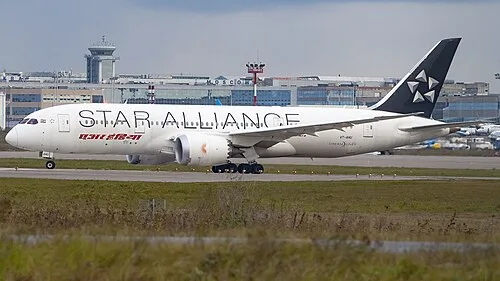
Star Alliance now counts 26 member airlines as of April 2026, coordinated through more than 50 global hubs and operating roughly 17,500 daily flights to over 190 countries. That scale alone tells you why the alliance matters. If your goal is maximum routing flexibility with a credible airport experience layered on top, Star Alliance still has the deepest bench.
The 26th member is ITA Airways, which formally joined Star Alliance on 1 April 2026, the culmination of the carrier's integration with Lufthansa Group following the German group's 2024 acquisition. ITA's arrival reshaped Rome Fiumicino from a SkyTeam outpost to a Star Alliance hub, materially improved Star Alliance's Southern European positioning, and gave Italy-based travellers a credible national-carrier-in-Star path for the first time since the old Alitalia exit from SkyTeam.
The full 2026 roster is: Aegean Airlines, Air Canada, Air China, Air India, Air New Zealand, All Nippon Airways (ANA), Asiana Airlines, Austrian Airlines, Avianca, Brussels Airlines, Copa Airlines, Croatia Airlines, EgyptAir, Ethiopian Airlines, EVA Air, ITA Airways, LOT Polish Airlines, Lufthansa, Shenzhen Airlines, Singapore Airlines, South African Airways, Swiss International Air Lines, TAP Air Portugal, Thai Airways International, Turkish Airlines, and United Airlines.
That is also where current guides need to be careful. Readers regularly see Lufthansa Group satellites or affiliates treated as if they were independent alliance members. Air Dolomiti is not a standalone Star Alliance member airline and should not be written as one. The same applies to Edelweiss (a SWISS subsidiary), Eurowings (Lufthansa Group), and various regional Star Connect Partners, these are operational extensions of member carriers rather than full alliance members in their own right.
Several developments since 2024 are worth flagging because they affect practical strategy. ITA's accession completed the Star Alliance side of the SkyTeam-to-Star migration. Air India's deeper integration with the Tata Group's Vistara consolidation has expanded Star Alliance's South Asia footprint. Asiana Airlines' merger with Korean Air remains in regulatory progress; until completion, both carriers remain in their respective alliances (Korean Air in SkyTeam, Asiana in Star Alliance), but the long-term implication is that Asiana will eventually exit Star Alliance and join SkyTeam, which will be a meaningful Asia-Pacific reshuffle. And ANA stopped issuing new Star Alliance Round the World award tickets on 23 June 2025, removing one of the alliance's longest-running redemption institutions.
Some airline statuses are mostly about vanity. Star Alliance Gold is not. Current alliance benefit materials describe a package that still travels well across the network.
This is why Star Alliance Gold remains one of the most practical elite outcomes in travel. It makes economy travel materially easier and still feels valuable even when individual member programmes annoy their own customers. AwardWallet's running summary of Star Alliance Gold benefits remains a useful reference for travellers comparing tier value across programmes.
Silver is much less exciting. It is useful as an entry recognition layer inside your home programme, but in alliance terms it is not where the magic lives. If you are trying to understand why people still chase Star Alliance status, the answer is Gold, not Silver.
Star Alliance is broad enough that the best programme depends heavily on who you are. There is no single default answer.
United MileagePlus remains central for North American travellers because it combines Star Alliance reach with strong U.S. relevance and easy access from Chase transfers. It is not the most elegant programme on every award, but it is highly usable.
Aeroplan continues to matter because it is often one of the most flexible ways to access Star Alliance inventory. It is especially relevant for travellers who want a modern, points-friendly programme with broad partner appeal.
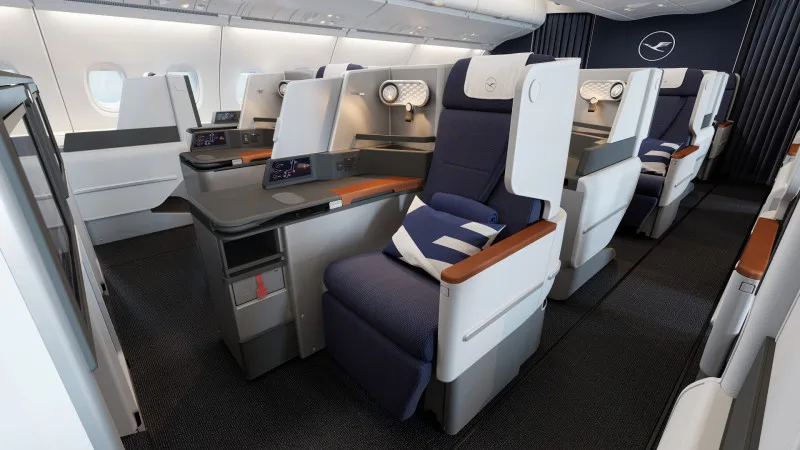
Miles & More matters because it is still the cultural heart of Lufthansa Group loyalty and one of the strongest programmes for Europe-based travellers who actually fly that ecosystem. It is not the simplest programme, but it is too important to dismiss. The Lufthansa Group's flagship long-haul product is the new Allegris cabin family, which redefines what a Star Alliance award redemption can deliver in business and first class.
Turkish Miles&Smiles and Avianca LifeMiles continue to matter for readers who are willing to do more work for selective redemption upside. Turkish's December 2025 devaluation moved partner business-class transatlantic redemptions from the famously cheap 45,000-mile band into a 45,000-85,000 range depending on routing, but the programme remains one of the few Star Alliance currencies still publishing a fixed-zone partner chart at all. Avianca LifeMiles is a transfer partner with most major U.S. flexible-points programmes and continues to price partner awards with relatively low fuel surcharges. The point is not that they are universally better, it is that Star Alliance is big enough to reward programme literacy.
Singapore Airlines KrisFlyer remains the canonical home for Singapore Suites and Singapore Business award redemption, particularly because Singapore restricts the lowest "Saver" award space on its own metal to KrisFlyer members exclusively, denying partner programmes access to the seats that the average award-chasing reader actually wants. ANA Mileage Club still publishes a fixed-zone partner chart with some of the cheapest long-haul business-class redemptions in the Star Alliance ecosystem (notably for round-trip transpacific itineraries), though the round-trip-only requirement and ANA's surcharge approach limit flexibility.
Star Alliance is one of the rare alliances where the "right" loyalty home depends meaningfully on the traveller's geography, earning ecosystem, and elite-recognition priorities. Here is a practical decision matrix.
For North American flyers anchored in the U.S.: United MileagePlus is the default choice and remains the easiest path to Star Alliance Gold through Premier Platinum or Premier 1K. United's Premier Plus Cabin (formerly Economy Plus) is also where MileagePlus members get the most consistent operational benefit on home metal.
For Canadian flyers: Air Canada Aeroplan is structurally superior to MileagePlus on Star Alliance partner award booking, Aeroplan's published partner chart, low fuel surcharges, and broader stopover allowance make it one of the most useful Star Alliance award currencies in the alliance. As of January 2026 Aeroplan's status programme is now revenue-based on Status Qualifying Credits (SQC), reaching Star Alliance Gold at 50K SQC.
For European Lufthansa Group regulars: Lufthansa Miles & More is the obvious home, but it is also one of the harder Star Alliance Gold statuses to earn. Miles & More Senator carries Star Gold but typically requires around 100,000 status miles (or substantial premium-cabin equivalents) within a calendar year. The redemption chart still levies high fuel surcharges that erode award value, so Miles & More is most useful as a status-and-earning programme rather than a partner-redemption currency.
For Asia-Pacific based travellers: Singapore KrisFlyer is the natural fit for travellers who want access to Singapore's own restricted Saver inventory. ANA Mileage Club is structurally weighted toward Japan-anchored travellers; the round-trip-only redemption rule makes it less flexible than KrisFlyer for one-way itinerary building.
For Turkey, the Middle East, and Eastern Europe-anchored travellers: Turkish Miles&Smiles is worth holding for both the geographic relevance and the residual fixed-chart partner redemption value, even after the December 2025 devaluation.
Star Alliance's depth gives multiple member programmes the option to publish their own award chart, which means sweet spots survive in pockets even as individual programmes devalue. The following are reliable redemption opportunities in May 2026; verify current pricing in the booking surface before transferring points.
None of these prices are static commitments from the carriers; they are the live pricing in the respective programmes' published partner charts as of May 2026. Programmes devalue without warning, so always confirm the live price before transferring flexible points.
If you live in a city where you constantly need fallback options, Star Alliance is hard to beat. Its scale means a single alliance strategy can cover a wide share of the globe without feeling thin in any one region.
The alliance's more-than-50-global-hub positioning matters because it increases your odds of smooth onward connections, backup routings, and practical recovery options when travel goes wrong.
Star Alliance Gold remains more universally tangible than many alliance-equivalent mid and top tiers elsewhere. Lounge access, baggage, check-in, boarding, and Gold Track are benefits most travellers actually feel.
The alliance is large enough that redemptions should be thought about in layers.
Most travellers start by identifying the Star Alliance routing they want, then comparing which member programme prices or exposes that itinerary best. That is the correct mental model. The alliance gives you reach; your programme choice determines whether the redemption is elegant or frustrating.
Partner access, website functionality, surcharges, and pricing logic all change. Star Alliance is full of opportunities, but competent strategy in 2026 means checking current availability and current programme rules rather than parroting a list of legendary prices from years ago.
A traveller who earns mostly Chase points may naturally look at United first. A traveller earning elsewhere may gravitate toward a different partner. The best Star Alliance programme is often the one your earning ecosystem can actually feed.
The Star Alliance Round the World award has been one of the most-discussed redemption institutions in travel for two decades. In 2026 it has narrowed but not disappeared. ANA Mileage Club, historically the cleanest way to book the Star Alliance RTW award, stopped issuing new award tickets on 23 June 2025, removing the most widely used route into the product.
What remains in 2026:
That makes Star Alliance the only major alliance where a chartable round-the-world award product still exists in 2026. SkyTeam discontinued its equivalent in 2023; oneworld retains its RTW Explorer paid fare but no longer offers a free RTW award redemption. For travellers prioritising RTW capability, the alliance choice is functionally binary.
Star Alliance in 2026 is still the alliance to beat if your priority is breadth, routing resilience, and a powerful Gold-tier travel experience. The alliance now operates as a 26-member system built around more than 50 global hubs with ITA Airways officially on board, and that scale still matters every time schedules change, connections tighten, or plans get more complicated than your original booking expected.
Just do not let breadth trick you into lazy thinking. Pick the right underlying programme, stop counting non-members as members, and use the alliance for what it does best: giving you practical options almost everywhere.
Programme rules verified against the official sources below. External sites open in a new tab.
See your requalification forecast in under a minute. No account, and never a loyalty password.
Forecast my status, free →Share
Last reviewed: · How we research and update
oneworld in 2026: the live 15-member roster, Ruby, Sapphire and Emerald benefits, the best frequent-flyer programmes to hold, the strongest…
Read article →United MileagePlus in 2026: the modern PQP/PQF Premier framework, non-expiring miles, Star Alliance value, card-linked PQP earning, and how…
Read article →Lufthansa Miles & More 2026: the modern Points, Qualifying Points, and HON Circle system, current status thresholds, and why the programme …
Read article →A 2026 comparison of KrisFlyer, Asia Miles, and Avios: expiry rules, redemption strengths, transfer access, and which programme fits which …
Read article →